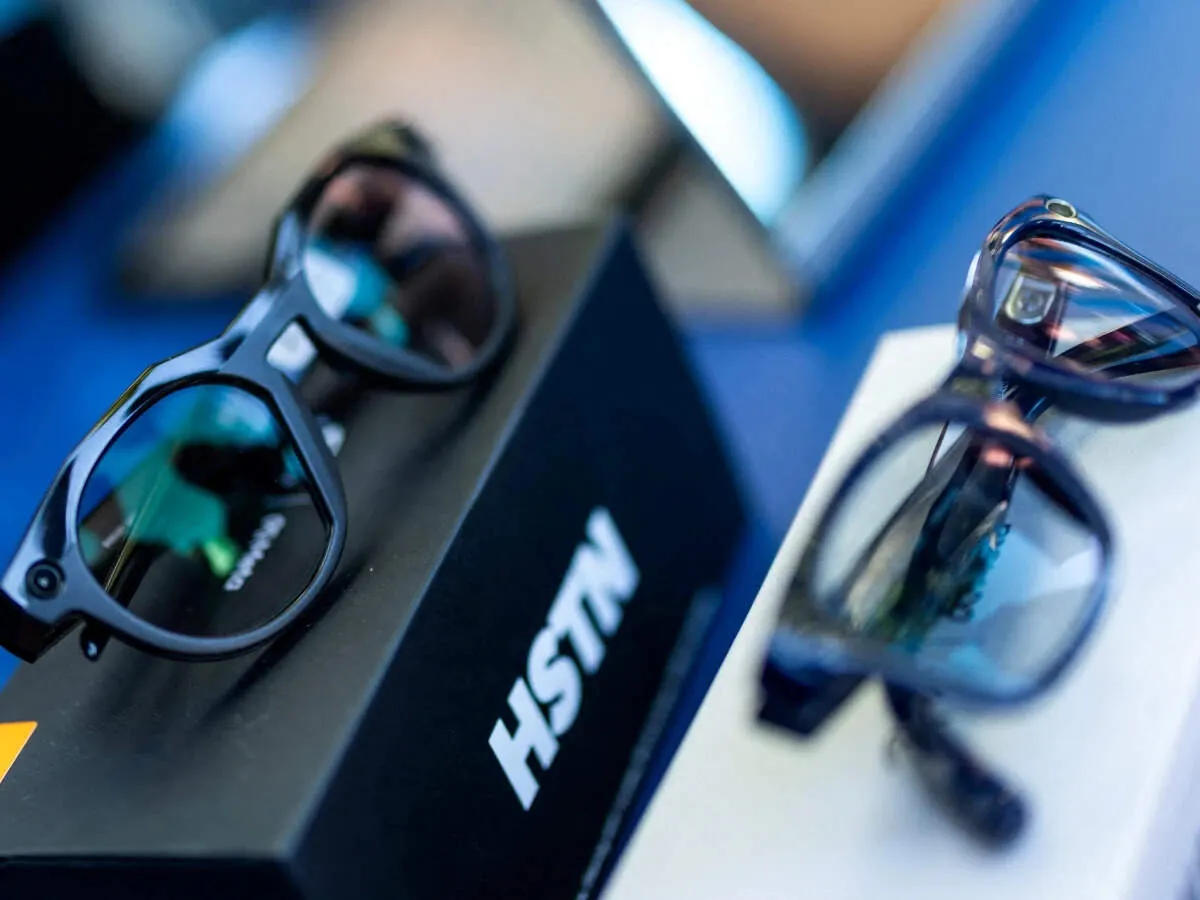
AI Smart Glasses in 2026: Are Smartphones Becoming Less Important?
AI Smart Glasses in 2026: Are Smartphones Becoming Less Important?
Imagine walking down the street, asking an AI assistant for directions, translating a foreign language, taking a photo, or receiving useful information without ever reaching into your pocket for a smartphone. This is no longer just a futuristic concept. AI-powered smart glasses are making these experiences increasingly practical in 2026.
Technology companies are investing heavily in wearable artificial intelligence. Smart glasses are evolving from simple accessories into connected devices capable of capturing images, recognizing surroundings, answering questions, playing audio, and assisting users throughout the day.
Companies such as Meta, Google, Samsung, and XREAL are helping shape this emerging market. Their products and platforms are introducing new ways to interact with digital information without constantly looking at a phone screen.
But an important question remains: Are AI smart glasses becoming good enough to make smartphones less important?
In this article, we explore how AI smart glasses work, their latest developments in 2026, the leading products, their advantages and limitations, and what the future might look like.
What Are AI Smart Glasses?

AI smart glasses are wearable devices that look similar to traditional eyeglasses but contain electronic components such as cameras, microphones, speakers, sensors, wireless connectivity, and artificial intelligence features.
Depending on the model, they can connect to a smartphone or use more advanced onboard computing systems to provide different digital experiences.
Unlike ordinary glasses, AI smart glasses can understand voice commands, capture photos and videos, provide information, and interact with AI assistants.
How Do AI Smart Glasses Work?
AI smart glasses combine several technologies to create a hands-free computing experience.
- Artificial Intelligence: Processes questions, interprets information, and helps users complete tasks.
- Cameras: Capture photos and videos and, on supported devices, provide visual information to AI systems.
- Microphones: Listen to voice commands and allow users to interact with assistants.
- Speakers: Deliver audio responses, music, navigation instructions, and calls.
- Sensors: Detect movement and provide contextual information.
- Wireless Connectivity: Connects glasses to smartphones, applications, and online services.
- Displays: Some advanced models project digital information into the user's field of view.
Not every smart glasses model includes all these features. Some focus mainly on cameras and audio, while others provide augmented reality displays and more advanced computing capabilities.
AI Smart Glasses vs Traditional Smart Glasses
Traditional smart glasses mainly focus on features such as audio playback, notifications, and basic connectivity. AI smart glasses take things further by using artificial intelligence to understand commands, analyze information, and provide contextual assistance.
For example, ordinary smart glasses may let you listen to music, while AI-powered glasses may allow you to ask questions about something you are looking at.
Why Are AI Smart Glasses Trending in 2026?
AI smart glasses are attracting attention because they offer a different approach to personal computing. Instead of constantly opening applications and switching between screens, users can interact with digital services through voice, cameras, and other hands-free controls.
Several developments are contributing to their growing popularity.
1. The Growth of AI Assistants
AI assistants are becoming more capable of understanding natural language, answering questions, and processing visual information.
When these assistants are integrated into wearable devices, users can access AI help without repeatedly taking out their phones.
2. More Natural Wearable Designs
Earlier smart glasses often looked like experimental technology. Newer products are increasingly designed to resemble ordinary eyewear, making them more suitable for everyday use.
3. Better Cameras and Audio
Improvements in miniature cameras, microphones, speakers, and wireless connectivity are helping manufacturers create more practical wearable devices.
4. Competition Between Technology Companies
Major technology companies are exploring different approaches to wearable AI. Meta has expanded its Ray-Ban smart glasses lineup, Google is developing its Android XR ecosystem with partners, and companies such as XREAL are bringing more advanced display experiences to consumers.
5. The Demand for Hands-Free Technology
People increasingly want technology that works naturally while they are walking, travelling, exercising, or performing everyday activities. Smart glasses offer a way to access useful digital features without holding a device.
Top AI Smart Glasses and Platforms to Watch in 2026

The smart glasses market includes different types of products. Some focus on AI assistants and cameras, while others provide virtual displays and augmented reality experiences.
Here are some important products and technology platforms shaping the industry.
1. Ray-Ban Meta Smart Glasses – Best for Everyday AI Assistance
Ray-Ban Meta smart glasses are among the most recognizable AI-powered eyewear products. Developed through the collaboration between Meta and EssilorLuxottica, these glasses combine familiar Ray-Ban styling with cameras, microphones, speakers, and Meta AI features.
They are designed for people who want to access useful technology without wearing something that looks like a traditional computer headset.
Key Features
- Built-in cameras for photos and videos.
- Voice interaction with Meta AI.
- Open-ear audio and hands-free calls.
- Music playback and voice controls.
- Support for selected AI-powered visual experiences.
- Integration with compatible smartphone applications.
Why They Matter
Ray-Ban Meta demonstrates how smart glasses can become part of everyday life. Users can capture moments, listen to audio, and interact with AI without constantly handling their smartphones.
However, these glasses are not a complete smartphone replacement. Many features depend on a compatible smartphone, connectivity, and supported services.
Official Website: Ray-Ban
2. Meta Ray-Ban Display – Bringing Screens Into Eyewear
Meta's Ray-Ban Display represents another important step in wearable computing. Unlike camera-and-audio-focused smart glasses, this product introduces a display integrated into one lens.
This creates opportunities for showing information directly in the user's field of view instead of requiring them to look down at a smartphone.
Key Features
- Integrated in-lens display.
- Visual information and notifications.
- AI-assisted interactions.
- Gesture-based controls through a compatible Neural Band.
- Hands-free access to supported information.
Why They Matter
Displays could make smart glasses more useful for navigation, quick messages, and contextual information. However, the available applications and display capabilities still differ considerably from a smartphone screen.
Official Website: Meta
3. Google Android XR Smart Glasses – Bringing Gemini Into Wearables
Google is working with hardware partners to bring its Android XR platform into wearable devices. The goal is to create a more natural way to access digital information and AI assistance through smart glasses.
Google's Gemini AI is an important part of this strategy, potentially allowing users to ask questions about their surroundings and receive contextual assistance.
Key Features and Capabilities
- Integration with Google's Gemini AI ecosystem.
- Voice-based assistance.
- Potential camera-based visual understanding.
- Connections with Android applications and services.
- Wearable computing experiences through Android XR.
Why They Matter
Google's involvement is significant because of its experience with Android, search, mapping, and artificial intelligence. A successful Android XR ecosystem could encourage more developers to create applications specifically for wearable devices.
Official Website: Android XR Developers
4. XREAL AURA – A New Direction for XR Glasses
XREAL is approaching wearable technology from a different direction. Its AURA glasses, introduced in October 2026, use Android XR to bring Android applications and virtual displays into a wearable experience.
Rather than simply adding a camera and AI assistant to traditional-looking glasses, XREAL focuses on spatial computing, virtual screens, and immersive digital experiences.
Key Features
- Android XR platform.
- Gemini integration.
- Micro-OLED displays with 1200p resolution per eye.
- 120Hz refresh rate.
- Virtual multi-window workspace.
- Compatible USB-C laptop display connection.
- Separate computing puck for processing.
Why They Matter
XREAL AURA demonstrates that wearable technology could eventually offer more than basic notifications and voice assistance. It points toward a future where users can work with multiple virtual screens without carrying a conventional monitor.
However, its separate computing unit, relatively high price, and regional availability mean it is not yet a practical replacement for everyday smartphones.
Official Website: XREAL
What Can AI Smart Glasses Do That Smartphones Cannot Do as Easily?
Smartphones are powerful devices, but they require users to hold them and look at their screens for many activities. Smart glasses introduce a more hands-free approach.
1. Hands-Free Photography
Smart glasses with built-in cameras allow users to capture photos and videos from their point of view. This can be useful while travelling, walking, attending events, or performing activities where holding a smartphone is inconvenient.
2. Real-Time AI Assistance
Supported AI glasses can allow users to ask questions about objects, surroundings, and information captured by their cameras.
For example, you could ask an AI assistant to identify a landmark, explain an unfamiliar object, or provide information about something in front of you.
3. Language Translation
AI-powered translation features can help users understand conversations in different languages. Depending on the product, translations may be delivered through audio or visual displays.
This could become especially useful for international travellers and people communicating across language barriers.
4. Navigation Without Constantly Checking a Phone
Future smart glasses with suitable displays could provide directions and location-related information directly in the user's field of view.
Some current products offer audio-based assistance, while more advanced visual navigation depends on specific hardware and software support.
5. Quick Access to Information
Instead of unlocking a smartphone to check every small detail, users may be able to ask questions through voice commands and receive spoken or visual answers.
This can make simple interactions faster and more convenient.
Can AI Smart Glasses Really Replace Smartphones?
This is the biggest question surrounding the future of smart glasses.
Although wearable AI is improving quickly, replacing smartphones completely is still difficult. Smartphones offer a large display, powerful processors, extensive application support, advanced cameras, and flexible input methods.
Smart glasses are currently better suited to specific activities rather than every digital task.
Where Smart Glasses Could Replace Smartphone Usage
- Quick voice-based searches.
- Hands-free photography and video recording.
- Listening to music and making calls.
- Basic AI assistance.
- Some translation and navigation tasks.
- Quick notifications and information access.
Where Smartphones Still Have the Advantage
- Watching long videos and detailed content.
- Writing lengthy messages and documents.
- Gaming and demanding applications.
- Advanced photo and video editing.
- Banking and secure account management.
- Complex multitasking and browsing.
- Large-screen productivity.
The most realistic outcome is that smartphones and smart glasses will work together. Glasses will handle quick, contextual interactions, while smartphones will remain the main device for more complicated activities.
Advantages of AI Smart Glasses
1. More Convenient Daily Interactions
Users can access certain digital features without constantly taking their phones out of their pockets.
2. Better Hands-Free Experiences
Smart glasses can be particularly useful when walking, travelling, or performing tasks that require both hands.
3. More Natural AI Interaction
Voice commands and visual understanding can make AI assistance feel more connected to everyday activities.
4. New Opportunities for Productivity
Display-equipped glasses could provide virtual screens, notifications, and contextual information for professionals and students.
5. Potential Accessibility Benefits
Audio assistance, visual recognition, and translation features could help people in certain accessibility and communication situations. Actual benefits depend on individual needs and device capabilities.
Disadvantages and Challenges of AI Smart Glasses
Despite their potential, AI smart glasses still face several challenges that could slow down widespread adoption.
1. Limited Battery Life
Small wearable devices have limited space for batteries. Cameras, wireless connectivity, displays, and AI-related processing can consume considerable power.
2. Privacy Concerns
Smart glasses with cameras and microphones raise important questions about recording, consent, and personal privacy.
People around the wearer may not always know when recording is taking place. Manufacturers need clear recording indicators, privacy controls, and responsible data policies.
3. Expensive Hardware
Advanced displays, cameras, sensors, and computing components can make smart glasses expensive. Premium XR devices can cost considerably more than ordinary eyewear.
4. Comfort and Design Limitations
Traditional glasses are usually lightweight and simple. Adding electronic components can increase weight, affect comfort, and make some designs less suitable for extended wear.
5. Internet and Smartphone Dependency
Many AI glasses rely on connected smartphones, cloud services, or internet access for advanced features. This can limit their usefulness in areas with poor connectivity.
6. Limited Application Ecosystems
Smartphones have mature application ecosystems developed over many years. Smart glasses still have a much smaller selection of applications and experiences.
Smart Glasses vs Smartphones: Complete Comparison
Both devices offer different advantages. The following comparison highlights where each technology currently performs better.
| Feature | AI Smart Glasses | Smartphones |
|---|---|---|
| Hands-Free Use | Excellent on supported models | Limited |
| Voice AI Assistance | Convenient | Widely supported |
| Photography | Convenient first-person capture | More versatile camera systems |
| Display Size | Small or virtual display | Large physical screen |
| Gaming | Limited or specialized XR experiences | Extensive mobile gaming |
| Battery Capacity | Generally limited | Generally larger |
| Application Ecosystem | Still developing | Highly developed |
| Portability | Wearable | Pocket-sized |
| Complex Productivity | Limited on most models | More practical |
| Privacy Considerations | Additional camera concerns | Established but still important |
Overall: Smartphones remain more versatile, while AI smart glasses offer convenience and hands-free interaction. Neither device completely replaces the other at present.
How AI Smart Glasses Could Change Everyday Life
As wearable AI becomes more advanced, smart glasses could influence several areas of daily life.
Education
Students could use AI-powered glasses to access contextual explanations, translation assistance, and visual learning tools. These features could complement traditional learning methods.
Travel and Tourism
Travellers could use smart glasses to access directions, understand foreign-language signs, and receive information about nearby landmarks.
Healthcare
In appropriate professional settings, wearable displays could help healthcare workers access instructions and relevant information without repeatedly handling another device. Such applications would require strict privacy, safety, and regulatory controls.
Business and Productivity
Professionals could access hands-free instructions, notifications, and virtual displays while working. This may be particularly useful in field operations, logistics, and technical environments.
Entertainment
XR glasses could offer larger virtual screens for watching videos, playing games, and enjoying immersive digital experiences.
The Future of AI Smart Glasses Beyond 2026
The next stage of wearable technology will likely focus on making smart glasses more independent, comfortable, and intelligent.
Several developments could influence their future:
- Smaller Components: More compact cameras, processors, and batteries could make glasses lighter and more comfortable.
- Better AI Models: More capable AI assistants could understand conversations, images, and surrounding environments more effectively.
- Advanced Displays: Improved optical technology could make digital information easier to view in everyday environments.
- Improved Battery Technology: Better energy efficiency could allow longer periods of use.
- More Applications: Developers could create new experiences for navigation, communication, education, and entertainment.
- Greater Smartphone Independence: Future devices may include more onboard processing and connectivity, reducing their dependence on smartphones.
However, these developments are not guaranteed to arrive quickly. Cost, privacy, battery limitations, comfort, and consumer demand will all influence how fast the market grows.
Frequently Asked Questions (FAQs)
1. Are AI smart glasses replacing smartphones in 2026?
No. AI smart glasses are becoming useful for hands-free assistance, photography, communication, and quick information access. However, smartphones remain necessary for many complex digital activities.
2. What are the best AI smart glasses in 2026?
Ray-Ban Meta glasses are an important option for everyday AI assistance and hands-free photography. Meta Ray-Ban Display introduces an in-lens display, while XREAL AURA focuses on Android XR and spatial computing. The best choice depends on your intended use.
3. Can AI smart glasses work without a smartphone?
Some models can perform basic functions independently, but many current AI smart glasses rely on a connected smartphone for setup, connectivity, applications, and advanced features. More advanced XR devices have different hardware requirements.
4. Can smart glasses take photos and record videos?
Yes. Many camera-equipped smart glasses can capture photos and videos through built-in cameras. Recording capabilities, video quality, storage, and privacy indicators vary by model.
5. Are AI smart glasses worth buying in 2026?
They can be worth buying if you want hands-free photography, audio, voice assistance, or specialized XR experiences. However, buyers should consider battery life, comfort, compatibility, pricing, and privacy before purchasing.
6. Do AI smart glasses need an internet connection?
Some basic functions can work offline, depending on the device. However, many advanced AI features require an internet connection to access cloud-based AI models and online services.
7. Are AI smart glasses safe for privacy?
They can be used responsibly, but camera and microphone access create privacy concerns. Users should follow local recording laws, respect consent, and understand the device's recording indicators and data policies.
Final Verdict: Are Smartphones Becoming Less Important?
AI smart glasses are changing the way people interact with technology, but they are not making smartphones obsolete just yet.
Their biggest advantage is convenience. Users can capture moments, ask AI questions, listen to audio, and access certain information without constantly reaching for a smartphone.
Products from Meta, Google, and XREAL demonstrate that wearable technology is moving beyond basic notifications and audio playback toward more advanced AI and spatial computing experiences.
Nevertheless, smartphones still offer larger displays, more powerful application ecosystems, versatile cameras, and better support for complex tasks.
The future may not be about choosing between smart glasses and smartphones. Instead, both devices could work together as part of a connected technology ecosystem.
Our conclusion: AI smart glasses may not replace smartphones in 2026, but they are making some traditional smartphone interactions less necessary. The next major shift in personal technology could be a combination of smartphones, AI assistants, and wearable computing.
Frequently Asked Questions
Is this guide beginner friendly?
Yes. This tutorial is written step-by-step for beginners.
Does this work in 2026?
Yes. This article is updated regularly with latest changes.
Where can I learn more?
Browse more tutorials on LoopGuy.




Comments (1)
Leave a Comment