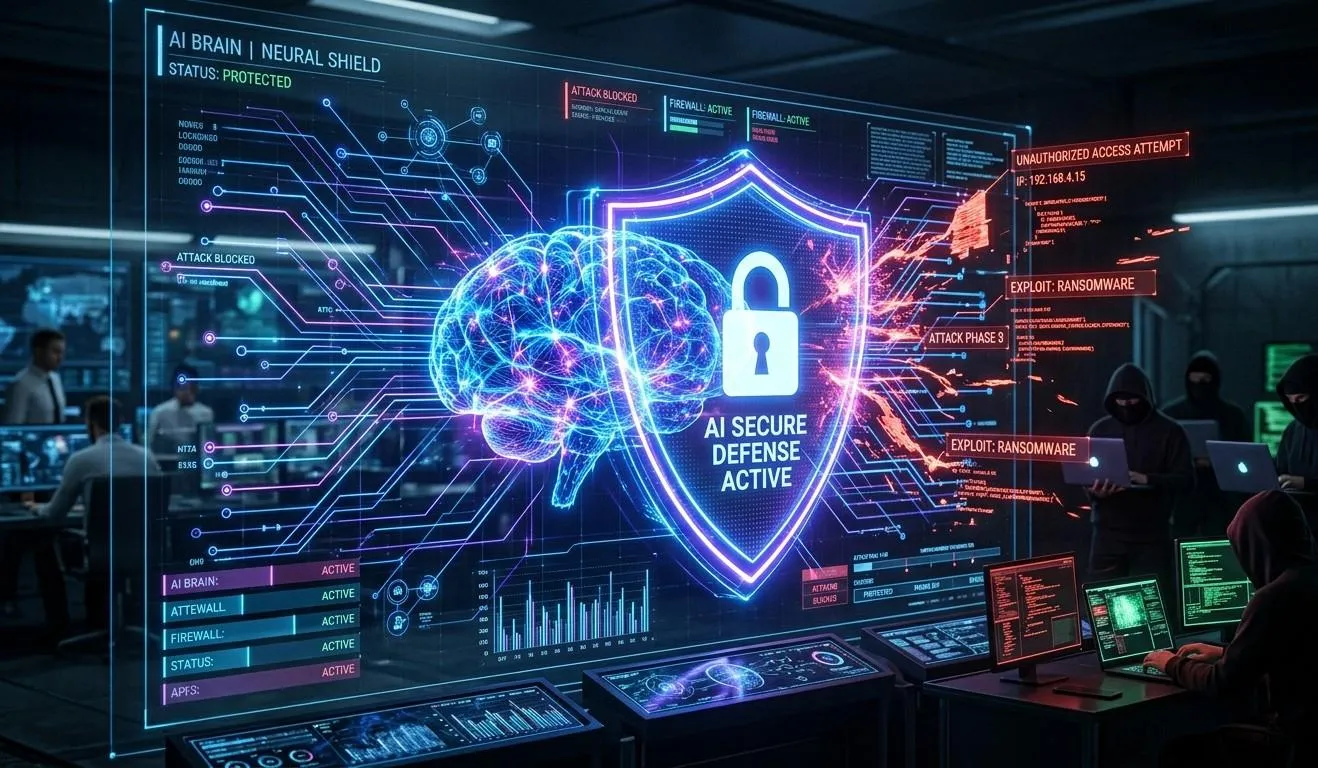
How AI Is Changing Cybersecurity: 7 New Online Threats in 2026
How AI Is Changing Cybersecurity: 7 New Online Threats in 2026
Artificial Intelligence (AI) is transforming the digital world, making everyday tasks faster and smarter. From AI chatbots to automated business systems, this technology is changing how people work and communicate. However, it is also creating new challenges for cybersecurity.
In 2026, cybercriminals are increasingly using AI to create convincing phishing emails, generate fake voices and videos, automate malicious activities, and develop more sophisticated online scams. These developments make it harder for ordinary internet users and businesses to recognize potential threats.
At the same time, cybersecurity professionals are using AI to detect suspicious activities, identify vulnerabilities, and protect sensitive information. This creates a new digital environment where both attackers and defenders benefit from artificial intelligence.
In this guide, we will explore how AI is changing cybersecurity, the seven major online threats you should know about in 2026, and practical ways to protect yourself.
What Is AI in Cybersecurity?
AI in cybersecurity refers to using artificial intelligence and machine learning technologies to identify, prevent, analyze, and respond to digital security threats.
Security professionals use AI-powered systems to monitor network activity, detect unusual login attempts, identify suspicious emails, and investigate potential cyberattacks.
However, cybercriminals can also misuse these technologies. They can generate realistic scam messages, impersonate trusted individuals, automate attacks, and search for weaknesses in digital systems.
According to Microsoft's 2026 Digital Defense Report, AI is changing the speed, scale, and automation of cyberattacks while also providing new opportunities for security professionals.

7 Major AI-Powered Cybersecurity Threats in 2026
Artificial intelligence is making several traditional cybercrime techniques more sophisticated. Here are seven important threats that individuals and businesses should understand.
1. AI-Powered Phishing Attacks
Phishing is one of the most common forms of cybercrime. It involves sending fake emails, text messages, or website links to trick people into revealing sensitive information such as passwords, banking details, or account credentials.
AI has made these attacks more convincing. Previously, phishing emails often contained spelling mistakes, poor grammar, and suspicious wording. AI tools can now generate professional-looking messages with personalized information and natural language.
For example, you might receive an email that appears to come from your bank, workplace, or an online shopping platform. The message may ask you to verify your account or update your payment information through a fake website.
Because these messages can look realistic, identifying phishing attempts has become more difficult.
How to Stay Safe:
- Never click suspicious links in unexpected emails or messages.
- Check the sender's actual email address before responding.
- Never share passwords or verification codes through unexpected requests.
- Visit official websites directly instead of following unfamiliar links.
- Enable multi-factor authentication on important accounts.
2. Deepfake Voice and Video Scams
Deepfake technology is another growing cybersecurity concern in 2026. AI can generate realistic audio and video that imitate another person's voice or appearance.
Cybercriminals can misuse this technology to impersonate family members, company executives, employees, or other trusted individuals.
Imagine receiving a phone call that sounds exactly like your manager. They urgently ask you to transfer money or share confidential business information. Although the voice sounds familiar, the person behind the call could be a criminal using AI-generated audio.
These scams can also involve fake video calls, making it harder to verify someone's identity through ordinary communication.
How to Stay Safe:
- Verify unusual financial requests through a separate communication channel.
- Confirm the identity of callers before sharing sensitive information.
- Use a private verification phrase with family members if appropriate.
- Follow company approval procedures before transferring money.
- Do not rely entirely on someone's voice or video to confirm their identity.
3. AI-Generated Malware and Automated Cyberattacks
Malware is malicious software designed to damage computer systems, steal information, or gain unauthorized access to devices and networks.
AI is helping attackers research vulnerabilities, develop malicious code, and automate certain stages of cyberattacks. Some criminals use AI to speed up technical tasks, while more advanced systems can coordinate multiple activities with less human intervention.
Google Threat Intelligence Group reported in September 2026 that some threat actors had moved beyond basic AI prompting toward agentic AI workflows and automated attack operations.
This means cybercriminals can potentially use AI systems to perform multiple connected tasks more quickly than traditional manual methods.
How to Stay Safe:
- Keep Windows, Android, iOS, and other applications updated.
- Download software only from official websites and trusted app stores.
- Use reputable antivirus and endpoint protection software.
- Avoid opening unexpected email attachments.
- Regularly back up important files and documents.
4. AI-Powered Identity Theft and Online Scams
Identity theft occurs when criminals use another person's personal information without permission. AI makes this problem more complicated because attackers can generate fake identities, profile pictures, documents, and convincing conversations.
For example, scammers may create fake social media accounts using AI-generated profile pictures. They can then contact people, build trust, and promote fraudulent investment opportunities or other scams.
AI can also help criminals produce personalized messages in different languages, allowing them to target more people.
How to Stay Safe:
- Avoid sharing sensitive personal information publicly.
- Enable two-factor authentication on important accounts.
- Verify unfamiliar social media profiles before trusting them.
- Be careful with investment offers promising guaranteed returns.
- Monitor your bank accounts and online transactions regularly.
5. AI-Powered Password and Account Attacks
Passwords remain one of the most important parts of online security. Cybercriminals use different techniques to gain access to accounts, including stolen credentials, password reuse, and automated login attempts.
AI can help attackers analyze available information and create more personalized social engineering attempts.
Another concern is session token theft. If attackers obtain valid session tokens, they may gain access to an account without entering its password again.
This means that even accounts protected by additional authentication methods can face risks if their active sessions are compromised.
How to Stay Safe:
- Use unique passwords for different websites.
- Create long and difficult-to-guess passwords.
- Use a trusted password manager.
- Enable passkeys or multi-factor authentication where available.
- Review account activity and sign out of unfamiliar sessions.
6. Attacks Against AI Chatbots and Applications
AI applications themselves are becoming targets for cybercriminals. Businesses increasingly use AI chatbots, virtual assistants, and automated agents to process information and perform tasks.
However, poorly secured AI applications may expose sensitive information or respond to malicious instructions.
One example is prompt injection. This occurs when malicious instructions are placed inside content that an AI system processes. These instructions may attempt to manipulate the system into ignoring its intended behavior or revealing information it should not disclose.
For example, a company employee might ask an AI assistant to summarize a document containing hidden malicious instructions. If the application is not properly protected, those instructions could influence its response.
The OWASP GenAI Security Project's 2026 Top 10 identifies prompt injection, sensitive information disclosure, and excessive agency among the major security risks affecting AI applications.
How to Stay Safe:
- Avoid entering passwords or confidential information into untrusted AI tools.
- Use reputable AI applications and services.
- Businesses should restrict AI access to sensitive information.
- Review application permissions regularly.
- Use security testing and monitoring for AI-powered systems.
7. AI-Driven Social Engineering Attacks
Social engineering involves manipulating people into sharing confidential information or performing actions that benefit criminals.
AI makes these attacks more convincing because scammers can create personalized messages, imitate communication styles, and generate realistic voices.
For example, a criminal might impersonate a technical support representative and contact someone about a fake account security issue. The attacker may create a sense of urgency and persuade the victim to reveal a password or verification code.
Unlike traditional hacking, social engineering often targets human trust rather than technical weaknesses.
How to Stay Safe:
- Be suspicious of unexpected urgent requests.
- Never share one-time passwords or verification codes.
- Confirm the identity of people requesting sensitive information.
- Avoid installing remote-access applications at the request of unknown callers.
- Contact organizations through their official communication channels.
How AI Is Helping Cybersecurity Professionals
Although AI creates new security challenges, it is also helping cybersecurity professionals defend against digital threats.
Organizations are using AI-powered security solutions to identify suspicious behavior, analyze large amounts of security data, and respond to potential incidents.
1. Real-Time Threat Detection
AI systems can analyze network activity and identify unusual patterns that may indicate a cyberattack. For example, if an account suddenly attempts to access multiple unfamiliar systems, security software may flag the activity for investigation.
2. Faster Incident Response
AI can help security teams prioritize alerts, investigate suspicious events, and automate certain defensive actions. This can reduce the time required to identify and respond to security incidents.
3. Fraud Detection
Banks and financial institutions can use machine learning to analyze transactions and identify unusual spending patterns. These systems can help detect suspicious activities before additional financial damage occurs.
4. Vulnerability Identification
AI-assisted security tools can help developers and security professionals identify software weaknesses. Organizations can investigate these issues and apply appropriate security updates.
5. Improved Email Security
AI-powered email security systems can analyze message content, sender behavior, and suspicious links to identify potential phishing attempts. These technologies provide an additional layer of protection against fraudulent messages.
AI Cybersecurity Threats vs. AI-Powered Protection
Artificial intelligence can be used for both malicious and defensive purposes. The following comparison explains how the same technology can support different cybersecurity activities.
| AI Used by Cybercriminals | AI Used by Security Professionals |
|---|---|
| Creates convincing phishing messages | Detects suspicious emails |
| Generates deepfake identities | Helps identify manipulated media |
| Automates malicious activities | Automates defensive responses |
| Searches for software weaknesses | Helps identify vulnerabilities |
| Supports identity theft and scams | Detects suspicious account activity |
| Assists credential theft attempts | Monitors unusual login behavior |
The important difference is how the technology is used and whether appropriate security controls are in place.
How to Protect Yourself From AI Cybersecurity Threats in 2026
You do not need to be a cybersecurity expert to improve your online safety. Following a few essential security practices can significantly reduce common risks.
1. Use Strong and Unique Passwords
Avoid using the same password across multiple websites. A password manager can help you create and securely store unique passwords.
2. Enable Two-Factor Authentication
Add an extra verification step to important accounts. Whenever possible, use passkeys or phishing-resistant authentication methods.
3. Keep Your Devices Updated
Install security updates for Windows, Android, iOS, browsers, and other applications. Updates often fix vulnerabilities that attackers could exploit.
4. Be Careful With AI-Generated Content
Do not automatically trust images, videos, audio recordings, or messages simply because they look realistic. Verify suspicious content before sharing information or taking action.
5. Avoid Suspicious Downloads
Download applications from official websites and trusted app stores. Avoid unknown files and software advertised through suspicious links.
6. Back Up Important Data
Keep backups of important documents, photos, and work files. Use a separate secure storage location whenever possible.
7. Learn to Recognize Online Scams
Understand common phishing techniques, fake websites, impersonation scams, and fraudulent investment offers. Awareness is an important part of online security.
8. Review Account Permissions
Check which applications and services can access your accounts, files, and personal information. Remove permissions you no longer need.
What Is the Future of AI in Cybersecurity?
AI will continue to influence cybersecurity as businesses and individuals adopt more intelligent software and automated systems.
Security professionals are likely to rely increasingly on AI for threat detection, vulnerability analysis, fraud prevention, and incident response.
At the same time, cybercriminals will continue experimenting with AI to improve existing attack methods. This means organizations must prepare for attacks that are faster, more personalized, and increasingly automated.
Another important challenge will be securing AI applications themselves. As organizations give AI agents access to business systems, documents, and digital services, controlling their permissions and protecting sensitive information will become increasingly important.
The future of cybersecurity will therefore depend on more than advanced technology. Strong security policies, regular updates, employee awareness, and responsible AI implementation will remain essential.
Final Thoughts
Artificial intelligence is changing cybersecurity in both positive and negative ways. It helps organizations detect threats and protect digital systems, but it also gives cybercriminals new ways to create convincing scams, impersonate people, and automate malicious activities.
In 2026, understanding these threats is important for everyone who uses the internet. Whether you use social media, online banking, email, or business applications, basic cybersecurity practices can help protect your digital identity.
The best approach is to stay informed, protect personal information, use strong authentication, keep devices updated, and verify suspicious requests before taking action.
AI may make cyberattacks more sophisticated, but good security habits and appropriate protection measures can help reduce your risk.
Frequently Asked Questions (FAQs)
1. How Is AI Changing Cybersecurity in 2026?
AI is helping cybersecurity professionals detect threats and automate security tasks. At the same time, criminals are using it to create phishing messages, deepfake scams, and more sophisticated cyberattacks.
2. What Are the Biggest AI Cybersecurity Threats?
Some major threats include AI-powered phishing, deepfake impersonation, automated cyberattacks, identity theft, prompt injection, and AI-assisted social engineering.
3. Can AI Create Fake Voices and Videos?
Yes. Generative AI can create realistic synthetic voices and manipulated videos that imitate real people. Criminals can misuse these technologies for impersonation and financial scams.
4. How Can I Protect Myself From AI-Powered Scams?
Use unique passwords, enable multi-factor authentication, avoid suspicious links, verify unexpected requests, and never share verification codes with unknown people.
5. Can AI Also Protect Against Cyberattacks?
Yes. Cybersecurity professionals use AI for suspicious activity detection, fraud prevention, email security, vulnerability analysis, and incident response.
6. Are AI-Powered Cyberattacks Fully Automated?
Not always. AI can automate or accelerate certain stages of an attack, but many real-world cyberattacks still involve human operators making decisions and directing activities.
7. Is AI Cybersecurity Important for Ordinary Internet Users?
Yes. Anyone using email, social media, online banking, or digital services can encounter AI-assisted scams. Basic cybersecurity practices are important for everyone.
Frequently Asked Questions
Is this guide beginner friendly?
Yes. This tutorial is written step-by-step for beginners.
Does this work in 2026?
Yes. This article is updated regularly with latest changes.
Where can I learn more?
Browse more tutorials on LoopGuy.





Comments (0)
No comments yet. Be the first to comment!
Leave a Comment