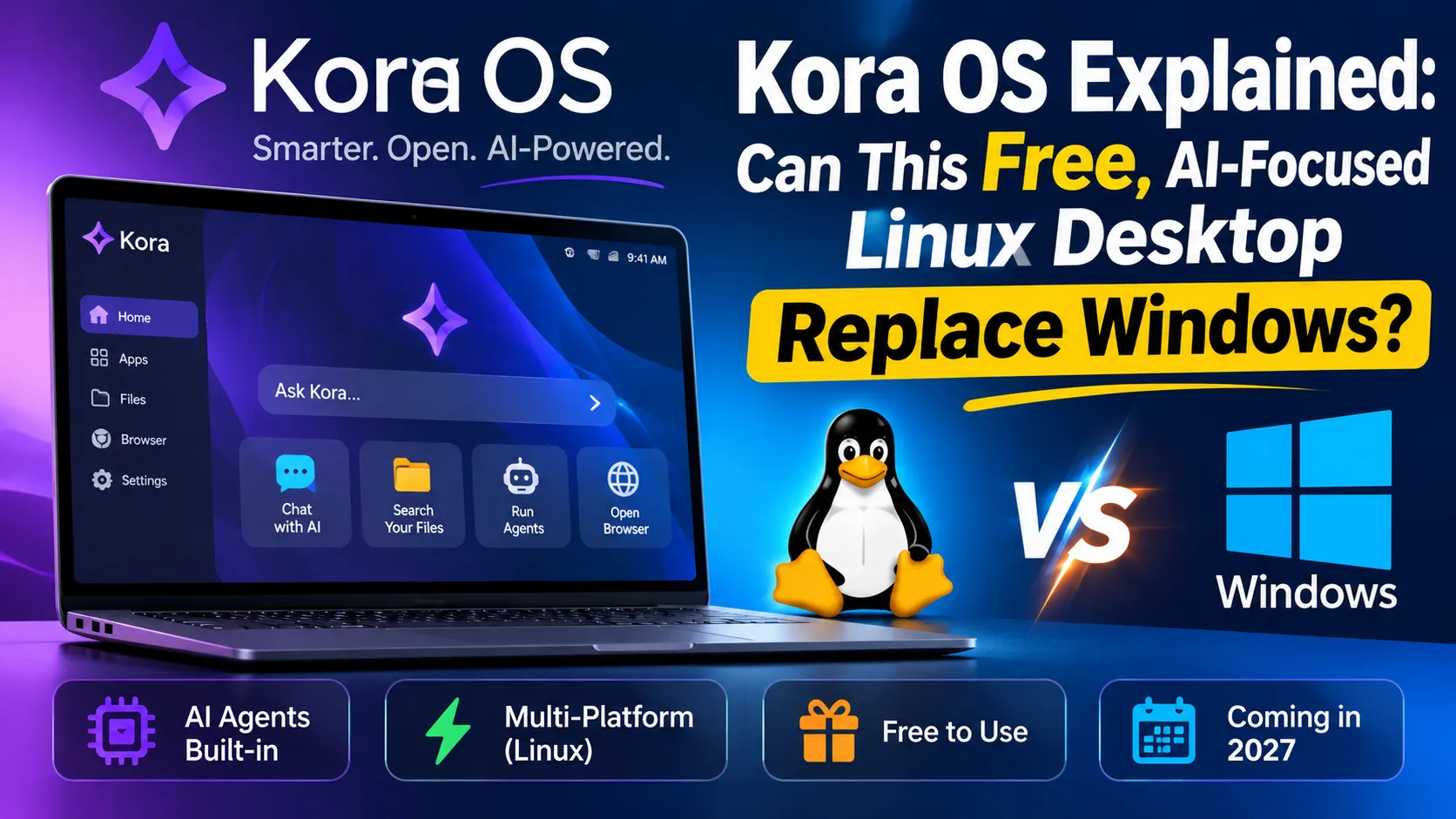
Kora OS Explained: Can This Free, AI-Focused Linux Desktop Replace Windows?
Kora OS Explained: Can This Free, AI-Focused Linux Desktop Replace Windows?
A new challenger to Windows has appeared, and it comes from someone who has tried this kind of fight before. Kirt McMaster, co-founder of Cyanogen, has unveiled Kora OS, a Linux-based desktop operating system that puts AI models and AI agents at the center of the computer. It is planned as a free-to-use OS for 2027. In this guide we explain what Kora OS is, what it promises, how it plans to make money, and whether it has a real chance against Windows.
What Is Kora OS?
Kora OS comes from Kora Systems, a Palo Alto company that was previously called Playtron and built a Linux-based gaming operating system. The company rebranded as Kora in July 2025 when it shifted its focus to AI.
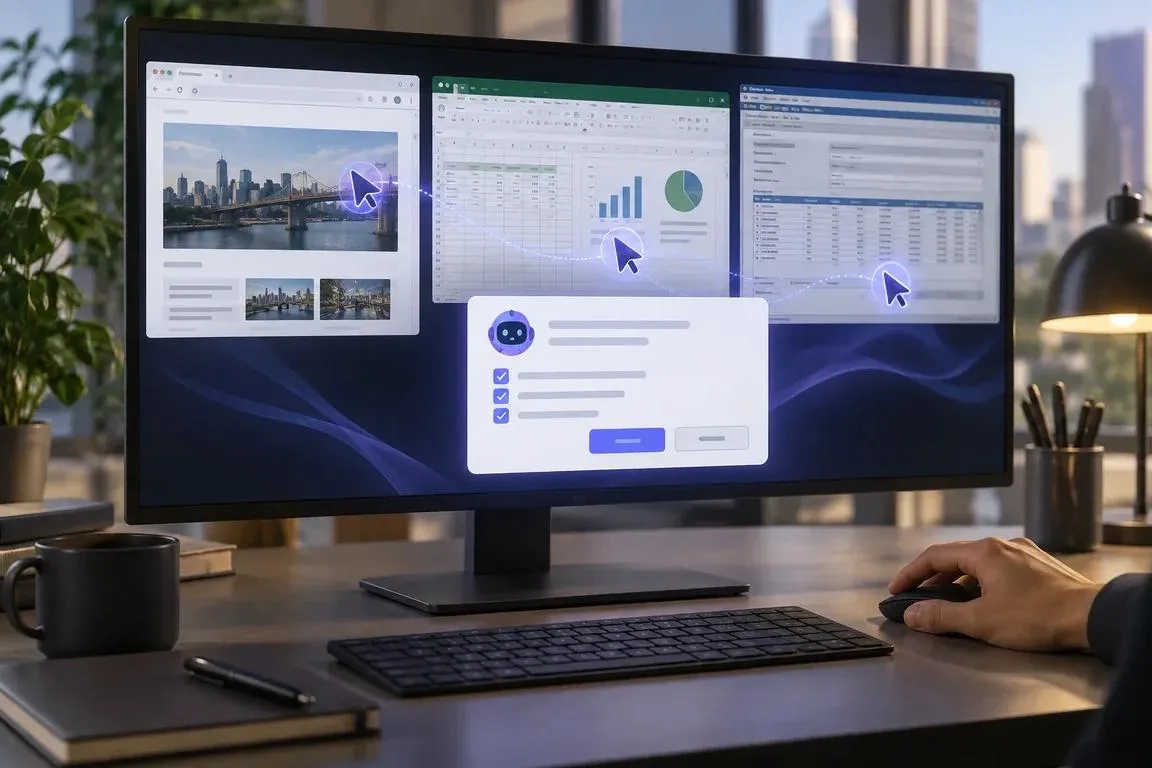
The idea is simple: instead of using AI only inside a browser tab or a single app, the operating system itself lets AI models and agents work across your applications, access your files and remember context between tasks.
Key Features of Kora OS
- AI built into the OS: models and agents can work across apps and use your files, rather than being locked inside one program.
- Memory between tasks: the system is designed to keep track of conversations, documents and other information.
- Separate workspaces for agents: AI agents run in their own workspaces with limited access to files and other resources, which is meant to improve safety.
- Multiple AI providers: the company says it intends to support models and services from different providers, not just one.
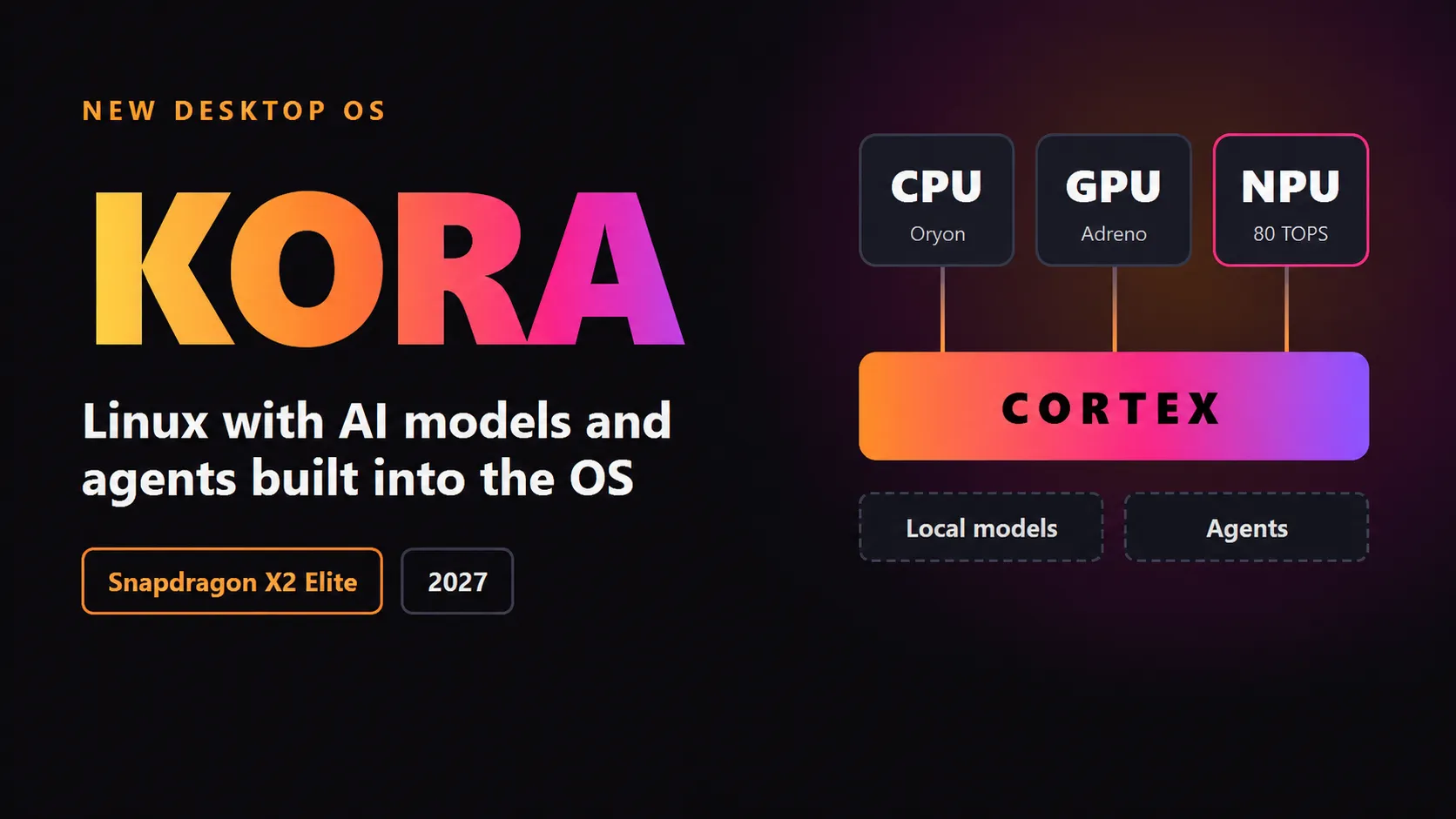
- Local and cloud AI: its Cortex engine is designed to run AI tasks on your own computer when possible and use cloud models for heavier work.
- Chord chat interface: a chat app that can use both local and frontier AI models.
- Gaming: a console-style experience called GameFrame, plus planned AI tools for creating and publishing games. Android app support is also on the roadmap.
Which PCs Will Run It?
Kora says the OS will support existing Intel and AMD PCs as well as computers with Qualcomm Snapdragon chips, including the Snapdragon X2 Elite. The team has worked with Qualcomm engineers for almost a year to optimize it for Snapdragon PCs. An enterprise version called Humain OS, developed with Saudi Arabia’s AI company Humain, is planned for Snapdragon laptops in 2027.
Is Kora OS Really Free?
Partly. The operating system is expected to be free to use, but the business plan relies on subscriptions that bundle access to AI models and agent services. So the OS is free, while the powerful AI features are where users are expected to pay.
Also note that although Kora is built on Linux and Nix, which are open source, the company says its own technology, including the Cortex AI engine and the desktop interface, is proprietary. It has not promised to make its software open source.
Who Is Kora OS For?
Kora is not trying to win over everyone. The founder says Microsoft can keep its billion users and that Kora is aimed at heavy AI users, the people who already pay for AI tools and use them daily. He estimates that around 45 to 50 million people account for much of today’s AI usage and revenue, and expects that to pass 200 million by 2033. These are the founder’s estimates, not independent figures.
Kora OS vs Windows
| Feature | Kora OS (planned) | Windows |
|---|---|---|
| Based on | Linux and Nix | Microsoft’s own system |
| Price | Free to use, paid AI subscriptions | Included with most PCs or bought separately |
| Main focus | AI models and agents across the whole system | General computing |
| Release | Expected in 2027 | Available now |
| Open source | Core parts are proprietary | No |
| App support | Android apps on the roadmap | Huge existing app and game library |
Kora details are from the company’s announcement and may change before release.
Can Kora OS Replace Windows?
Not soon, and probably not for most people. Windows held about 77% of the global desktop market in October 2026, according to StatCounter, so it is very hard to displace. The challenges for Kora include:
- Software compatibility: Windows has a huge library of apps, games and professional tools that people depend on.
- Hardware partners: Kora has not yet named PC makers that will ship machines with it.
- Trust and privacy: giving AI agents access to your files is powerful, but it raises security and privacy questions that users will want answered.
- Subscription costs: a free OS may still lead to ongoing AI fees.
- It does not exist yet: real-world performance can only be judged once people can test it.
On the other side, the founder has history. Cyanogen tried to challenge Android and shut down its OS business, and he says the main lesson was not to depend on the company you are competing with. Kora is built on Linux instead of Windows or Google services, and its engineers are mostly from the Linux gaming community.
Who Is Behind It?
Kora has about 50 engineers, who use AI coding tools including OpenAI’s Codex and Anthropic’s Claude to speed up development. The company has investors including Samsung Next, Square Enix, Alumni Ventures, Polychain, VanEck and Circle, but has not disclosed how much it has raised.
What Should Windows Users Do Now?
- Don’t switch yet. Wait for the release and independent reviews in 2027.
- Keep Windows updated and back up your important files.
- Try Linux first if you are curious, using a live USB or a virtual machine, to see whether a Linux desktop suits your workflow.
- Follow official updates from Kora Systems at kora.fun for release details.
Frequently Asked Questions
When will Kora OS be released?
The company says it is expected to launch in 2027. No exact date has been given.
Is Kora OS free?
The operating system is planned to be free to use, but the company expects to earn money from subscriptions that bundle AI models and agent services.
Is Kora OS open source?
It is built on open-source Linux and Nix, but Kora’s own technology, including Cortex and the desktop interface, is proprietary.
Can I install Kora OS on my current PC?
The company says it will support existing Intel and AMD PCs and Snapdragon machines. Exact requirements have not been published.
Will Kora OS run Windows apps?
This has not been announced. The company has mentioned Android app support on its roadmap.
Will Kora OS replace Windows?
It is aimed at heavy AI users rather than everyone, so it is more likely to be an alternative for a niche audience than a replacement for most Windows users.
Final Thoughts
Kora OS is one of the most interesting ideas in desktop computing this year: an operating system built around AI agents rather than adding AI on top. But it is still a plan, not a product. Watch for the 2027 launch, real hardware partners and independent reviews before making any decision. For more Windows, Linux and AI news, keep following LoopGuy.
Frequently Asked Questions
Is this guide beginner friendly?
Yes. This tutorial is written step-by-step for beginners.
Does this work in 2026?
Yes. This article is updated regularly with latest changes.
Where can I learn more?
Browse more tutorials on LoopGuy.


Comments (0)
No comments yet. Be the first to comment!
Leave a Comment